
The power of regenerative barley on climate, water, and biodiversity
Soil Capital
57:25
Why Barley?
Barley is one of the world’s most important cereal crops — and aligning high-quality malting barley production with regenerative agriculture is technically demanding. The standards for protein content and germination rates are strict, but not impossible to meet — and some pioneering farmers are proving just that, with benefits for soil health, resilient yields, and lower carbon emissions.
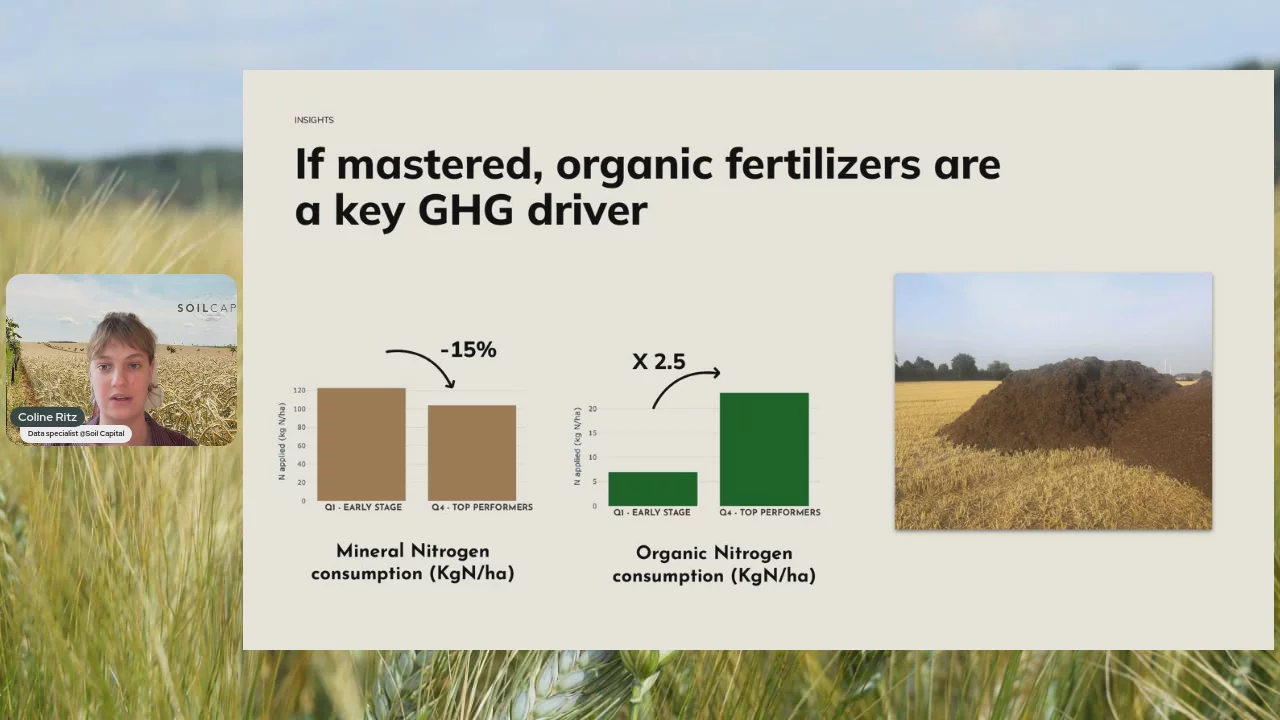
In this webinar, we went behind the scenes with real farmers in our programme to share farm-level data, success stories, and lessons learned. The goal: to demonstrate that transitioning barley systems to regenerative models is not just possible — it’s already happening.
What you’ll learn from this session:
- Real data from regenerative barley farms in France, the UK, and Belgium
- Practice changes making a measurable difference while maintaining malting quality
- Benchmark data: carbon sequestration, soil health metrics, water efficiency
- What sets top-performing farms apart — and the support they need.
Who is this for?
This session was designed for malters, brewers, sustainability managers, agri-food decision-makers, and agriculture teams looking to:
- Reduce CO₂ emissions while growing their business
- Align sustainability targets with financial performance
- Explore proven pathways for scaling regenerative agriculture for barley
Speaker

Coline Ritz
Data Scientist
With a background in machine learning and deep learning applied to climate and carbon, her work sits at the intersection of ML and agronomy. She builds the models and pipelines that turn farm-level data into evidence-based insights, helping quantify what regenerative agriculture actually achieves, from crop yields to greenhouse gas emissions modelling.
Replays
See all

The power of regenerative barley on climate, water, and biodiversity
57:25