
Tender season: how to challenge the carbon surcharge before it's locked in
Searoutes
28:57
Annual tender season opens after the summer, and this year's negotiations carry a line most shippers still accept as published: the carrier's EU ETS surcharge. On one lane, published surcharges for the same box range 66% from lowest to highest under four different surcharge names, built on four different methodologies, all of them fleet averages with a buffer on top. Whatever mechanism you sign this cycle, you pay through 2027.
In this session we break down how carriers actually construct the carbon surcharge and where the buffer hides. We model one real voyage from the bottom up fuel consumption, transit days, emissions, EUA market price, and put the result next to the published surcharge on the same trade. Then we show what an auditable ETS and BAF mechanism looks like inside a tender packet: consumption and transit fixed at tender, only market prices moving, every update verifiable by both sides.
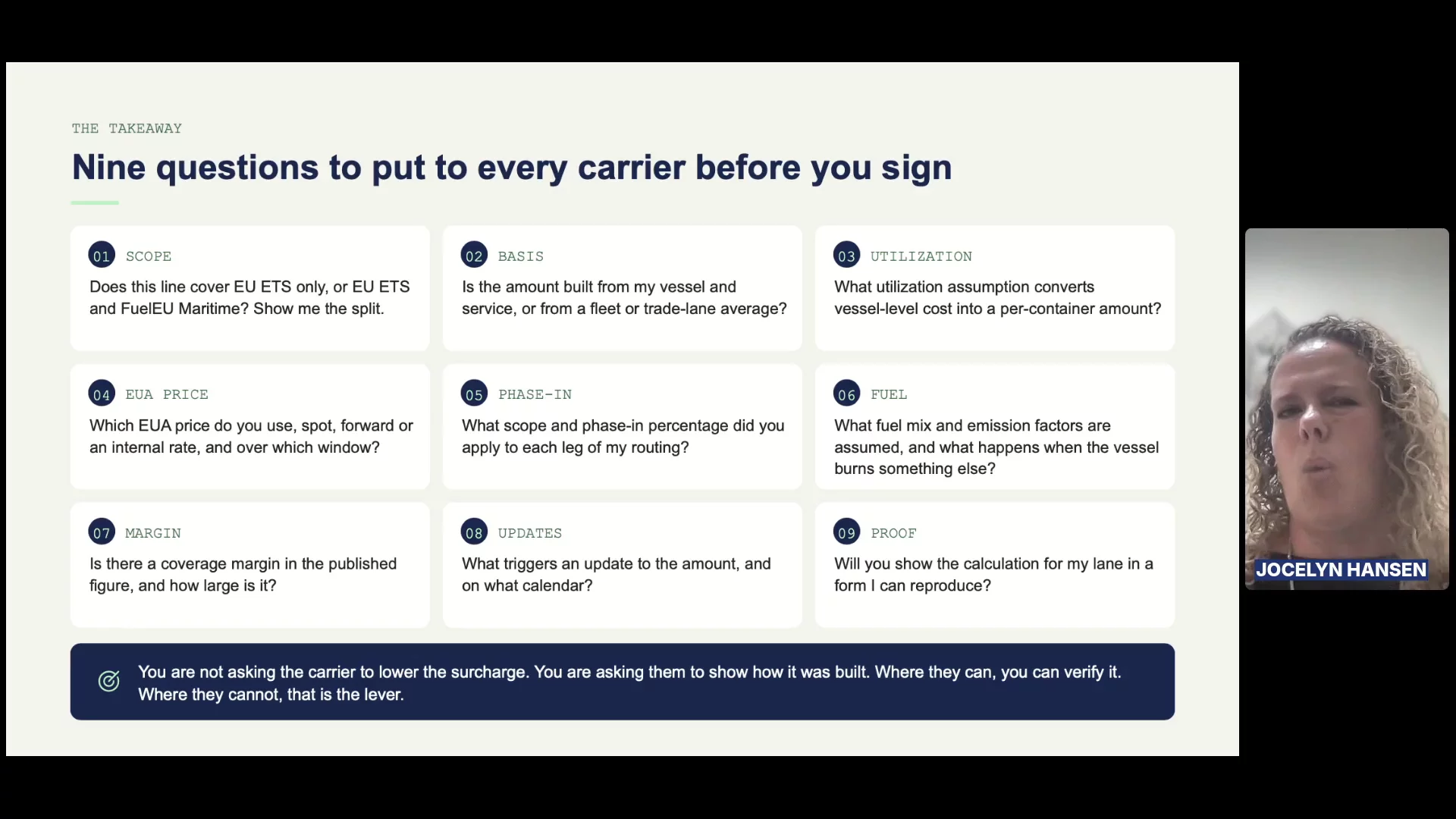
You'll leave with a shortlist of questions to put to every carrier in your tender before you sign.
Speaker

Jocelyn Hansen
VP Sales & Marketing
Jocelyn Hansen is VP Sales & Marketing at Searoutes, a logistics insights platform helping shippers and freight forwarders calculate, report and act on their freight emissions. With deep expertise in green logistics, carbon emission reduction and strategic sales, Josie works at the intersection of sustainability and commercial performance, helping logistics leaders turn emissions data into operational and financial decisions. Her background spans supply chain, international trade, SaaS and freight forwarding, making her a trusted voice on the practical realities of decarbonising global freight.
Replays
See all
Tender season: how to challenge the carbon surcharge before it's locked in
28:57