
All Reasonable Steps: Are You Ready for the New Employment Rights Act Duty?
Safecall
51:10
What organisations must do now to prepare for the October 2026 prevention requirements
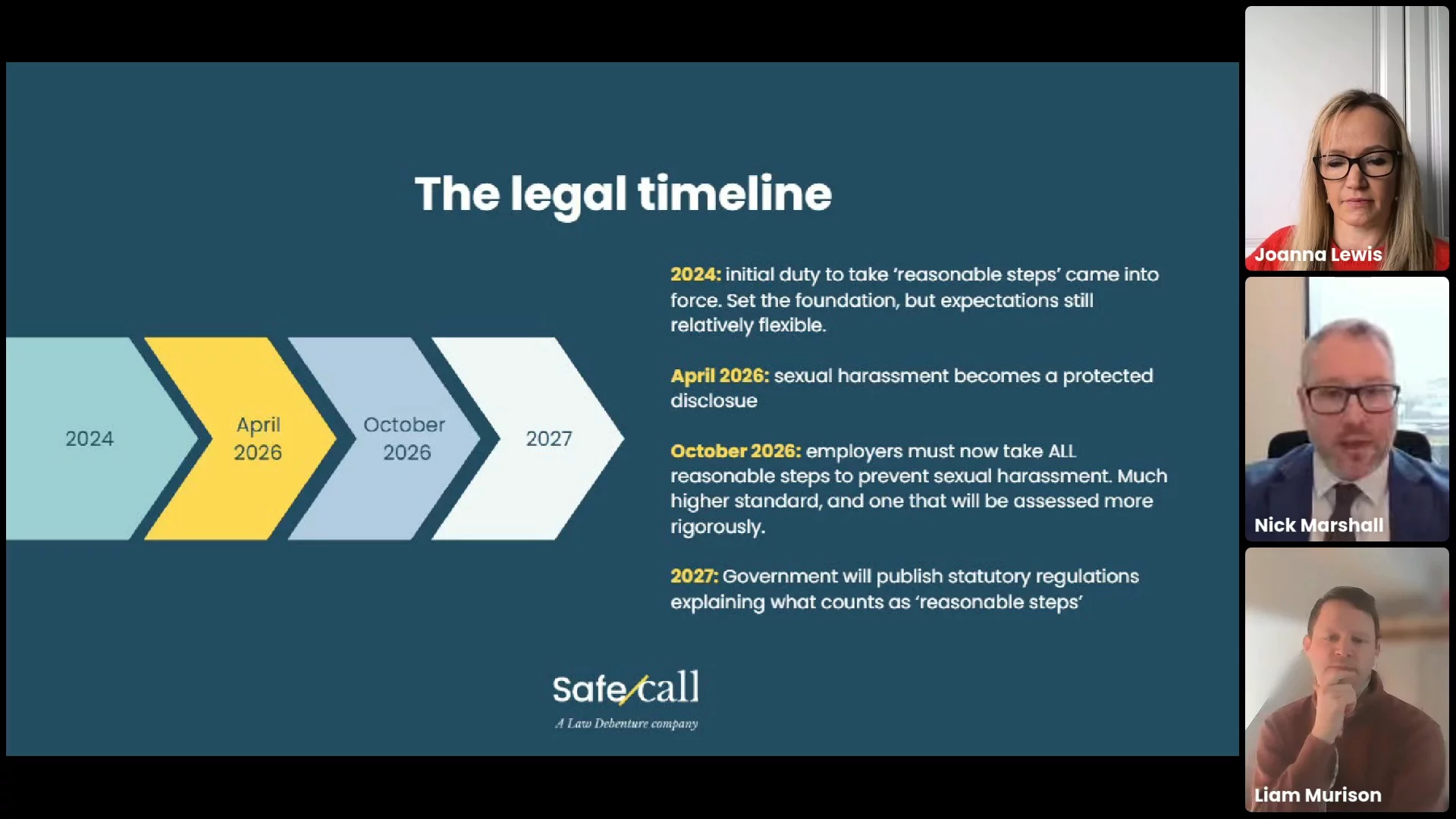
From October 2026, employers will face a new legal test: can you prove you took “all reasonable steps” to prevent sexual harassment in your workplace?
This isn’t just a policy update - it’s a fundamental shift in employer responsibility under the updated Employment Rights Act. To comply, organisations must demonstrate real, proactive action: prevention, training, trusted reporting routes, robust investigations, and clear governance.
Yet many organisations are still unclear on what “all reasonable steps” actually means in practice, and what regulators will expect to see.
In this session, our expert panel will break down the upcoming changes and share practical, actionable steps organisations need to take now. We’ll explore how culture, reporting systems, managerial capability, and independent oversight all fit into the new prevention duty, and how employers can build a defensible evidence trail ahead of the deadline.
This webinar will help HR leaders, compliance teams, and senior executives cut through the noise and understand exactly how to prepare.
What you’ll learn:
- What the new Employment Rights Act prevention duty really requires
- Why “all reasonable steps” is a legal test — and what evidence you’ll need to demonstrate it
- The risks of inaction: rising claims, growing scrutiny, and uncapped whistleblowing compensation
- How employee trust, reporting channels, manager capability, and investigation quality shape compliance
- Practical steps to build a defensible, organisation‑wide framework before October 2026
Who should attend:
- HR directors & people leaders
- C-suite executives & board members
- Compliance, risk, and legal teams
- Internal investigators and case handlers
- Culture, ethics, and safeguarding leads
- Anyone responsible for employee wellbeing, organisational risk, or governance
Speakers

Joanna Lewis
Managing Director, Safecall
Joanna is the Managing Director of Safecall. She leads the Safecall business teams in delivering confidential whistleblowing services, training, and independent investigations on behalf of organisations around the world. As part of that role, Joanna sees the effect that whistleblowing reporting has on promoting positive working cultures and preventing or mitigating damage to business reputations.

Nick Marshall
Partner, Linklaters LLP
Nick is a partner in the Employment & Incentives team at the leading global law firm, Linklaters. He has a broad international practice, covering litigation, strategic advisory, investigations, and transactional matters.
With particular expertise in litigation and alternative dispute resolution, Nick has significant experience acting for employers in employment law claims before courts and tribunals. He often works closely with organisations and their PR advisers on crisis and reputation management, particularly in the context of internal and regulatory investigations, and litigation.
Nick regularly advises on matters relating to sexual harassment in the workplace, from designing and implementing policies and procedures, to complying with legal obligations, and helping clients when things go wrong. This background gives Nick a practical, risk focused perspective on how organisations can prepare for, and evidence compliance with, the revised obligations on employers that will come into force later this year.

Liam Murison
Head of HR, Kier Group & Kier Property
Liam is the Head of HR and Policy Development at Kier Group, responsible for supporting the organisation’s corporate functions and ensuring that all HR policies and processes align with the EVP, are legally compliant, and remain fit for purpose. His role also includes monitoring and responding to legislative changes, such as the Workers Protection Act and the Employment Rights Act.
Replays
See allAll Reasonable Steps: Are You Ready for the New Employment Rights Act Duty?
51:10