
What Airflow's Model Gets Right and Where it Breaks
Kestra
46:31
Airflow 2 reaches end of life in April 2026. Most teams are treating it as a version upgrade. It's not. It's an architectural decision that will shape who can own workflows and how failures get diagnosed for years to come.
Whether you're on open-source Airflow, Amazon MWAA, Astronomer, or Cloud Composer, the underlying model is the same: orchestration lives inside executable Python. That means only Python developers who know Airflow internals can own workflows, and what works at 50 DAGs starts to strain at 500. Airflow 3 improves the ergonomics, but the model is the same.
Before you commit engineering resources to an upgrade or a migration, it's worth understanding where that model holds up and where it doesn't.
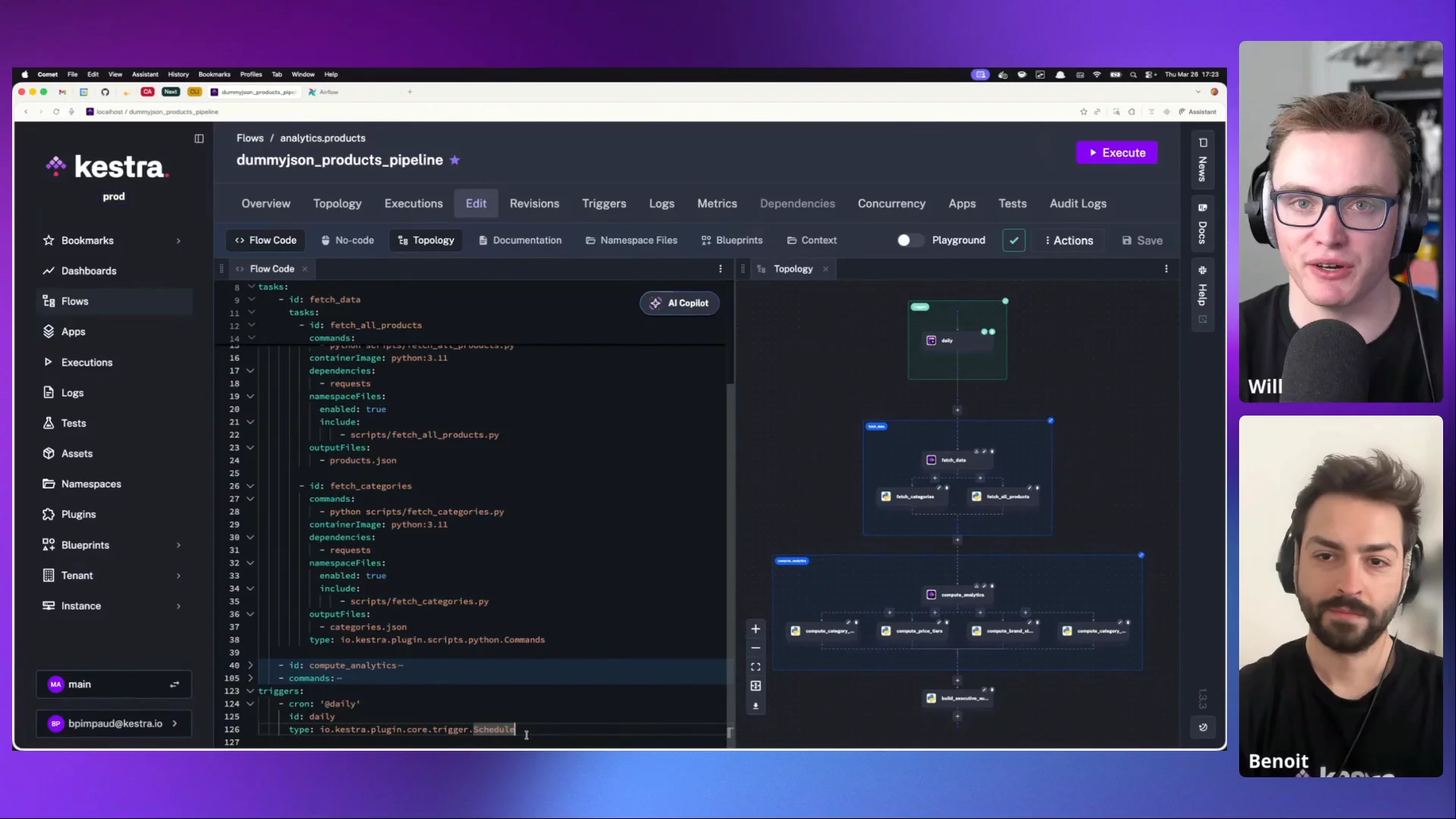
Benoit and Will will walk through where Airflow's architecture holds up and where it strains, compare it against a declarative, language-agnostic orchestrator like Kestra, and demo AI-assisted DAG migration from Python to YAML in minutes.
Speakers

Will Russell
Developer Advocate

Benoit Pimpaud
Product Manager
Replays
See all
What Airflow's Model Gets Right and Where it Breaks
46:31