
WCEF2026: Building Inclusive Circular Textile Ecosystems
Enviu - we build world changing companies
02:32:10
Introduction to Enviu & WCEF
The World Circular Economy Forum 2026 (WCEF2026) brings together global leaders, businesses, policymakers, researchers and innovators to accelerate the transition to a circular economy through practical and scalable solutions. As part of the official WCEF2026 programme, Accelerator Sessions showcase real-world approaches, foster collaboration and inspire action across sectors and geographies.
Enviu Textiles is proud to host an official online WCEF2026 Accelerator Session, Building Inclusive Circular Textile Ecosystems. Through its Closing the Loop programme, Enviu Textiles is working with entrepreneurs, waste management enterprises, manufacturers, brands and ecosystem partners to strengthen post-consumer textile ecosystems in India. This session will share practical insights from that journey while bringing together diverse perspectives on building inclusive, market-driven circular textile systems.
What is the Accelerator Session About?
Building Inclusive Circular Textile Ecosystems is an interactive online session exploring what it takes to build thriving post-consumer textile ecosystems.
Rather than focusing solely on the challenge of textile waste, the session will examine the systems, partnerships, business models and innovations required to transform discarded textiles into lasting environmental, social and economic value. Drawing on practical experiences from India and perspectives from global leaders, participants will gain a deeper understanding of how circular textile ecosystems are designed, strengthened and scaled.
What to Expect
Through keynote presentations, practitioner conversations, venture showcases and an interactive panel discussion, the session will explore the key building blocks of circular textile ecosystems.
Expect practical insights from organisations working across the textile value chain, conversations around collaboration and market creation, examples of innovative circular business models, and opportunities to engage with speakers through audience Q&A. Whether you're looking to deepen your understanding of textile circularity or explore new partnerships, the session is designed to provide actionable ideas and meaningful dialogue.
Panel Discussion
The session will conclude with a multi-stakeholder panel discussion featuring leaders from industry, philanthropy and the circular economy ecosystem.
Together, the panel will explore what is needed to strengthen post-consumer textile ecosystems, the role of collaboration in driving change, and the opportunities to accelerate circular textile solutions globally. Participants will also have the opportunity to ask questions and engage directly with the speakers.
Key Note Speaker
Smt. Vrunda Manohar Desai, IRS
Textile Commissioner, Ministry of Textiles, Government of India
Smt. Vrunda Desai brings an important policy and sector-wide perspective to the conversation, drawing on her leadership at the Office of the Textile Commissioner. She will share her insights on India’s evolving textile ecosystem and the opportunities and actions needed to strengthen circularity at scale.
Invited speakers:
Hear from practitioners, innovators and ecosystem builders working across the textile value chain.
The session will bring together representatives from organisations including:
- Greenworms, Textile Waste Management Enterprise
- Hasiru Dala, Textile Waste Management Enterprise
- WeVois, Solid Waste Management Enterprise
- Upaya Social Ventures
- Global Alliance for Textiles Sustainability (GATS)
- Ellen Macarthur Foundation
- Birla Cellulose
- Kosha.ai
- Tooused
Interactive Q&A
Bring your questions, ideas and experiences to the conversation. The session will include dedicated time for audience interaction, giving participants the opportunity to engage directly with speakers, explore challenges and exchange perspectives with a global community working towards circular textiles.
Who is This For?
Whether you're already working in circular textiles or looking to better understand the space, this session is designed for professionals driving change across the textile value chain.
This includes fashion and textile brands, manufacturers, recyclers, waste management enterprises, entrepreneurs, investors, philanthropic funders, development organisations, researchers, sustainability professionals and ecosystem builders interested in shaping the future of circular textiles.
Join us on 17 September 2026 for this official WCEF 2026 Accelerator Session. The exact session timing will be confirmed by the WCEF organisers in the coming weeks.
Speakers

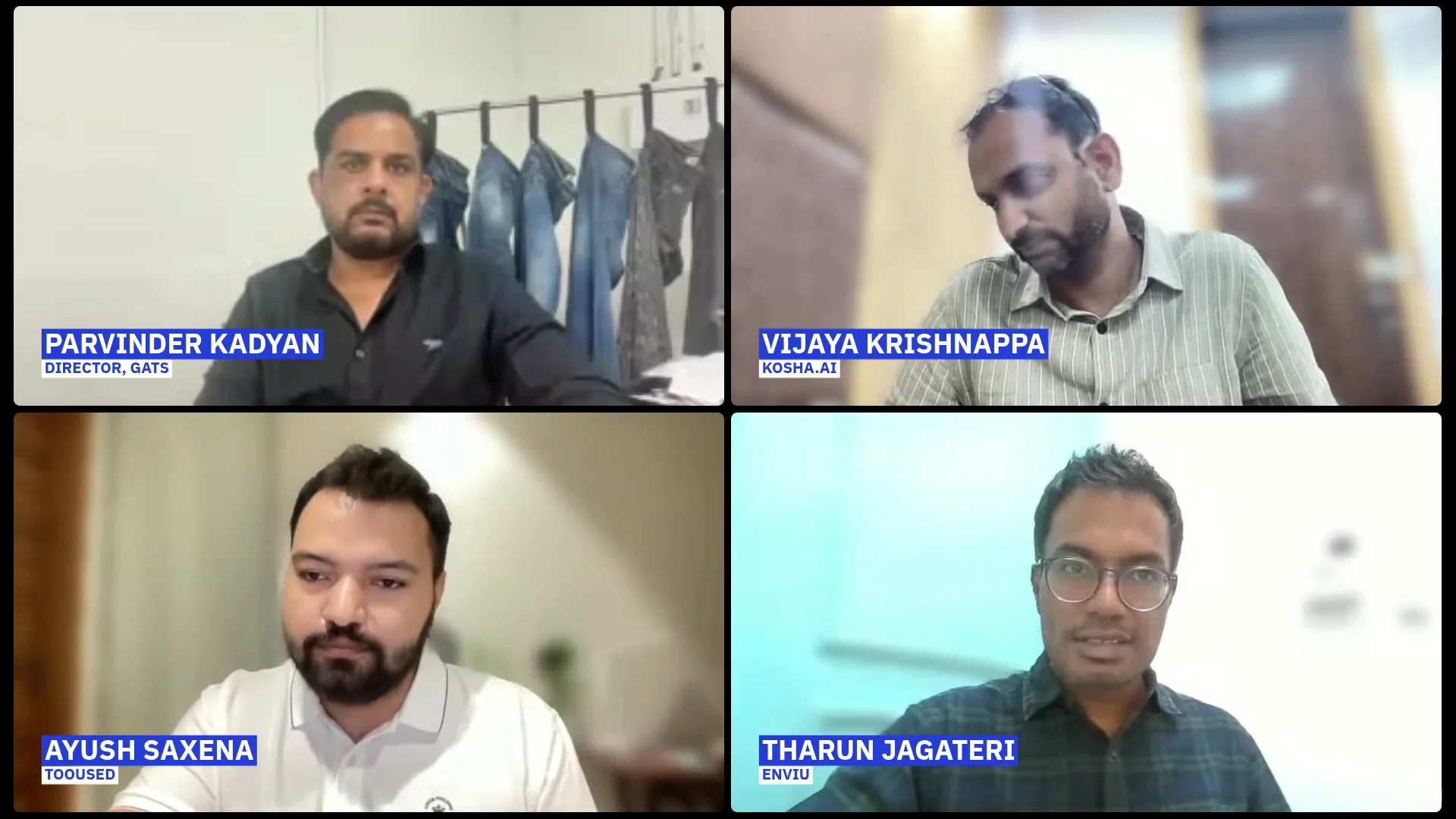
Parvinder Kadyan
Chairperson at Global Alliance For Textile Sustainability Council (GATS)
Parvinder is the Founder of Aadi Sustainability Solutions and the Global Alliance for Textile Sustainability Council (GATS). A leading voice in sustainable manufacturing and circular textiles, he works closely with industry, policymakers, and global stakeholders to accelerate the adoption of circular business models, traceability, and resource-efficient practices across India's textile value chain.

Chakravarthy AB
Co-CEO at Upaya Social Ventures
Chakra leads India operations at Upaya Social Ventures, where he partners with entrepreneurs building businesses that create dignified jobs for underserved communities. With deep expertise in impact investing, venture growth, and ecosystem building, he has spent over two decades supporting purpose-driven enterprises to scale sustainable and inclusive solutions across India.

Jabir Karat
Founder, Green Worms
Jabir works on building inclusive waste recovery systems that recognise waste workers as an essential part of the circular economy. His experience working alongside waste pickers shaped his approach to creating stronger collection and recovery networks. Through Green Worms, he focuses on connecting waste workers, communities and businesses while developing the Textile Recovery Facility (TRF) model to strengthen textile recovery and create dignified livelihoods.

Kirsty Emery-Laws
Programme Manager, Fashion & Textiles, Ellen MacArthur Foundation
Kirsty Emery-Laws works with businesses, governments and NGOs to help transform the fashion industry for a circular economy. At the Ellen MacArthur Foundation, she focuses on rethinking how fashion products are designed, made and used, and currently oversees The Fashion ReModel, a flagship initiative exploring how businesses can move towards circular business models at scale. Before joining the Foundation, Kirsty co-founded Unmade, a fashion technology company focused on tackling overproduction.

Vijaya Krishnappa
Co-Founder, KOSHA.ai
Vijaya Krishnappa is a textile engineer and entrepreneur with over 16 years of experience across fashion, supply chain and management consulting. As Co-founder and CEO of KOSHA.ai, he works on using deep technology, AI and traceability to build more transparent and circular textile systems. His work focuses on material identification, textile traceability and enabling better decisions across the textile value chain.

Mayank Singh
Founder & CEO, Tooused
Mayank Singh is the Founder and CEO of Tooused, where he is building India’s reverse logistics network for textiles. His work focuses on creating organised pathways for used clothing through collection, sorting and recovery, helping connect post-consumer textiles with the right next step. By strengthening the infrastructure between consumers and the wider textile recovery ecosystem, he is working to make textile circularity more practical, efficient and scalable.

Somes Bhaumik
Vice President, Operations, TRADC, Birla Cellulose.
Somes Bhaumik works at Birla Cellulose, bringing expertise in textile fibres, research, applications and process development. His work focuses on fibre innovation and exploring how materials can be processed, developed and applied to create more sustainable solutions across the textile industry, including pathways beyond first use.

Abhinav Shekhar Vashistha
Co-Founder & CTO, WeVOIS
Abhinav Shekhar Vashistha works on using technology to make waste management more organised, data-driven and scalable. His work focuses on building technology and infrastructure that enable better decision-making across waste management, improve material recovery and strengthen the systems that manage materials after use.

Mouna Balakrishna
Project Manager, Textile Waste Management, Hasiru Dala
Mouna works on developing inclusive and circular solutions for post-consumer textile waste, bringing together environmental sustainability and social inclusion. Her work focuses on strengthening the Textile Recovery Facility (TRF) model across collection, sorting, recovery, reuse and value creation, while creating dignified and sustainable livelihood opportunities for waste picker communities. She works across project implementation, stakeholder engagement, partnerships, market development and strengthening the operational and livelihood dimensions of textile recovery.
Replays
See all

WCEF2026: Building Inclusive Circular Textile Ecosystems
02:32:10